A Historic Century
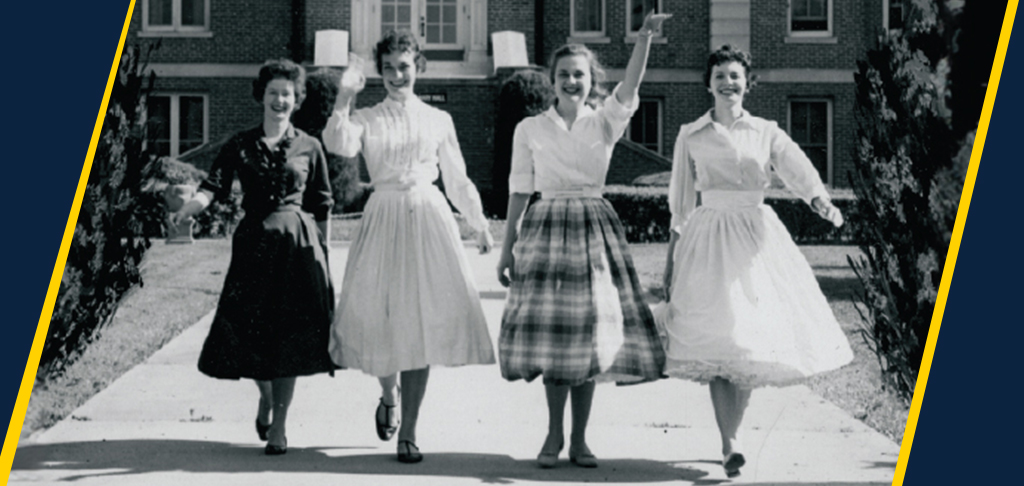
On Nov. 11, 1858, a group of pioneer sisters arrived in Kansas territory – setting into motion a legacy of education, health care, and service. They began their educational ministry with Saint Mary Academy just a few months after arriving. By the early 1920s, they expanded their reach – opening Saint Mary College in 1923.
A century later, Saint Mary remains rooted in the vision and values of its founders. The Sisters of Charity of Leavenworth established a college built on educating the whole person. They inspired a commitment to the Gospel and encouraged generations of students to strive for excellence and justice. They paved the way for thousands of students to earn an affordable, values-centered education.
In 2023, Saint Mary honors this heritage – remembering the progress, developments, and decisions that defined each decade.
1920s
The Sisters of Charity of Leavenworth established Saint Mary Junior College in 1923 to further the education of the sisters, academy graduates, and other young women. The initial Catalog outlined that the college’s purpose was “to train the student in various types of fundamental courses, thus enabling her to lay a foundation for some special field during her Junior and Senior years.” From its early years, Saint Mary also expressed an openness to all faith traditions with the 1925-1927 Catalog stating, “Although a Catholic Institution, the Saint Mary College and Academy receives pupils of every denomination, and no attempt is made to interfere with their religious conviction.”

1930s
Saint Mary transitioned to a four-year college in 1930, and the first baccalaureate degrees were conferred in 1932. Construction of the $750,000 Berchmans Hall was completed in 1930. The ground and first floors were for classroom use and included an assembly hall, social rooms, gymnasium, swimming pool, post office, and lounge with a soda fountain. The upper three stories were used as dormitory rooms.
1940s
During the 1940s, Saint Mary College added a three-year nursing program. Nursing students completed general education requirements on campus during their first year and practiced nursing skills at Sisters of Charity hospitals one day per week. During the second two years, student-nurses spent time learning at SCL hospital sites. The campus community was also involved in World War II projects, including writing editorials in the Taper, purchasing war bonds, and forming a United States Cadet Nurse Corps.
1950s
To further concentrate on the baccalaureate education of women, the Board of Control of the Sisters of Charity closed Saint Mary Academy in 1950. Saint Mary College students were encouraged to “actively participate in Catholic Action and civic affairs,” as stated in the 1950 Catalog. The college experienced record enrollments during the decade, which continued into the ’60s and ’70s. To accommodate this growth, Saint Mary added more day and night classes and launched a graduate division in the field of education.
1960s
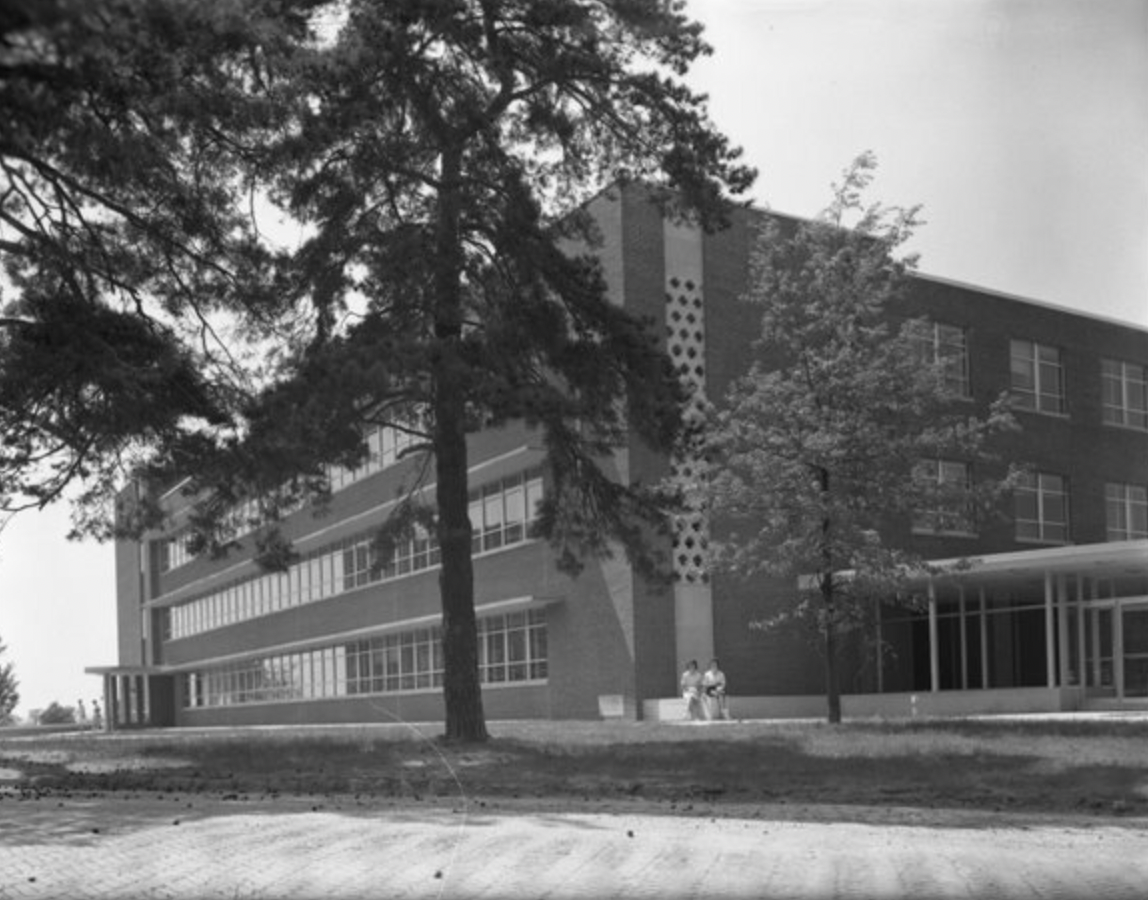
The 1960s brought a gradual relaxation of many traditional Saint Mary rules and practices, including formal evening dinners, curfews, and room checks. Momentum and the need for change also led the college to open Miege Hall in 1962. The building provided modern labs for the sciences, home economics, and languages. The decade also brought the opening of Saint Joseph Dining Hall and Maria Hall.
1970s
Significant change continued into the 1970s with an emphasis on expanding learning beyond the curriculum with a full roster of extracurricular activities. The college also instituted an Interim Term designed especially to accommodate travel to other countries to study history, art, literature, and other subjects. Saint Mary also initiated the Goals Curriculum in 1974, which placed the individual student at the center of the program. The focus was on personal growth as well as academic development.

1980s
The opening of De Paul Library in 1981 launched a series of changes in the buildings across campus. Xavier, Saint Mary, and Mead Halls had significant space dedicated to library holdings and study areas. Once the spaces were cleared, the older buildings were renovated into administrative and academic areas. The student body also changed significantly in the ’80s when Saint Mary College became fully coeducational in 1988. This decision came after a two-year, campus-wide study.
In 1993, Saint Mary became a legal corporation in its own right – separate from the corporation of the Sisters of Charity. This change led to the formation of the first Board of Trustees, which was and remains comprised of sisters and lay men and women. With the development of many athletic teams in the ’80s and ’90s, Saint Mary opened Ryan Sports Center in 1992. The baseball field and football practice field were also completed in 1999, and the Spires played their first football game on Sept. 13, 1999.
2000s
Saint Mary College became the University of Saint Mary in 2003, recognizing the institution’s growing number of graduate programs. During this era, the university launched a longstanding mission statement that reflects the increased diversity of students, recognizes USM’s place in a global society, and sets forth specific core values. The 2003-2004 Catalog included the new statement: “The University of Saint Mary educates students of diverse backgrounds to realize their God-given potential and prepares them for value-centered lives and careers that contribute to the well-being of our global society. The University of Saint Mary believes in the dignity of each person’s capacity to learn, to relate, and to better our diverse world. We value community, respect, justice, and excellence.”

2010s
Carrying on a strategic focus from the mid-2000s, USM launched a number of health care degree programs in the 2010s. The Stefani Doctor of Physical Therapy program welcomed its first cohort in 2012. USM then followed with an Online Master of Science in Nursing, Accelerated Bachelor of Science in Nursing, undergraduate exercise science program, Master of Science in Athletic Training, and Master of Science in Nursing-Family Nurse Practitioner track. With the addition of these degrees, the university repurposed Berchmans Hall as a center for health sciences. The university also opened Charles J. Berkel Memorial Stadium in 2015 and renovated De Paul Library, which became the Keleher Learning Commons in 2019.
2020s
The COVID-19 pandemic greatly impacted academic and campus life in 2020 and 2021. From mid-March to May 2020, the university shifted to remote operations – transitioning classes to an online format and cancelling all on-campus events, including the spring sports season. However, USM remained steady, launching the Doctor of Education in Leadership and Doctor of Occupational Therapy. In 2023, the university now offers more than 30 undergraduate majors, minors, and concentrations, 11 master’s degrees, and three doctoral programs. The athletic department has also grown to 28 varsity sports and focuses on developing Champions of Character.
A Bright Future
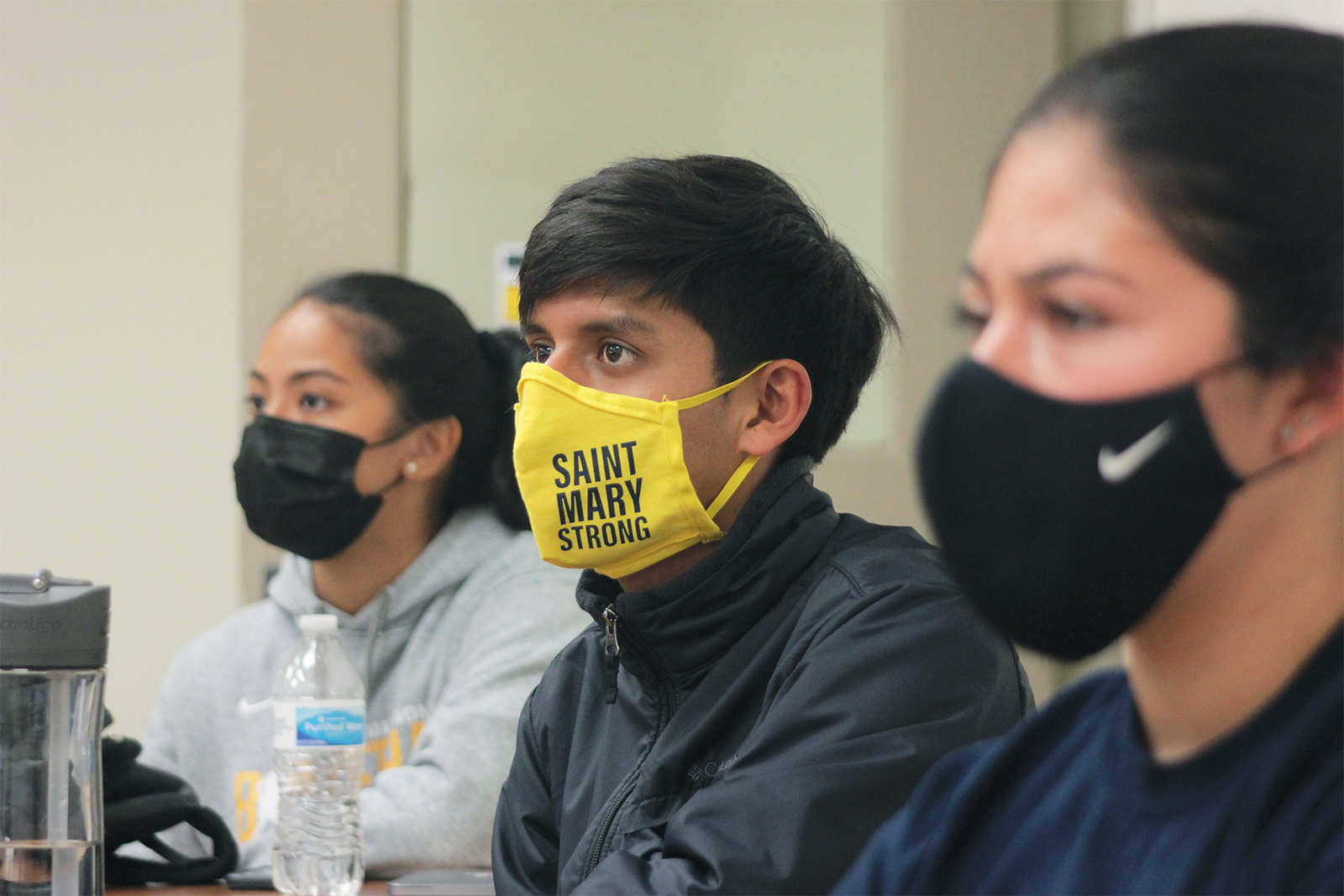
A century after its founding, Saint Mary remains committed to providing access to an excellent education. The university will continue welcoming students of every denomination as it has done since 1923. Saint Mary will encourage the next generation of students to actively participate in civic affairs as is tradition. The institution will remain rooted in its mission and help new Spires realize their God-given potential.
Article Resources
Rieke, Susan, SCL, C’66 By Straight and Twisting Ways: A History of the University of Saint Mary
 Aspire Magazine
Leave a comment