Patricia O’Brien, C’77, Receives National Recognition for Social Justice Advocacy and Research
On an ordinary Friday evening, Patricia O’Brien, C’77, was wrapping up her workweek when she received a phone call that would alter the course of her career.
On the other end of the line was a man whose sister, “Mary,” had been charged with the murder of her husband. The brother asked O’Brien to visit Mary in the county jail and hear her story.
The next day, O’Brien did just that, and learned about the years of abuse Mary had endured before the fateful day of the shooting. As the executive director of a battered women’s shelter, O’Brien had heard many stories of domestic violence, but Mary’s case was unique.
O’Brien partnered with the public defender to delve into the mitigating factors of the shooting and prepared to testify at Mary’s trial. Despite their efforts, Mary was convicted; however, she was released after two and a half years due to ineffective counsel.
While she celebrated Mary’s release, O’Brien quickly realized that freedom didn’t equate to a return to normalcy. Mary now had a strained relationship with her sons, and she lost her cosmetology license due to the felony conviction. Mary’s challenges compounded, and eventually, she returned to prison on a fraud charge.
This experience ignited two critical questions for O’Brien. Who helps individuals once they are released from prison? And how should social workers assist them in rebuilding their lives? These burning questions led O’Brien to pursue a PhD at the University of Kansas.
In the years that followed, O’Brien became a trailblazer in research on carceral corrections and transformative social justice. She was among the first to focus on incarcerated women, and her groundbreaking work didn’t go unnoticed.
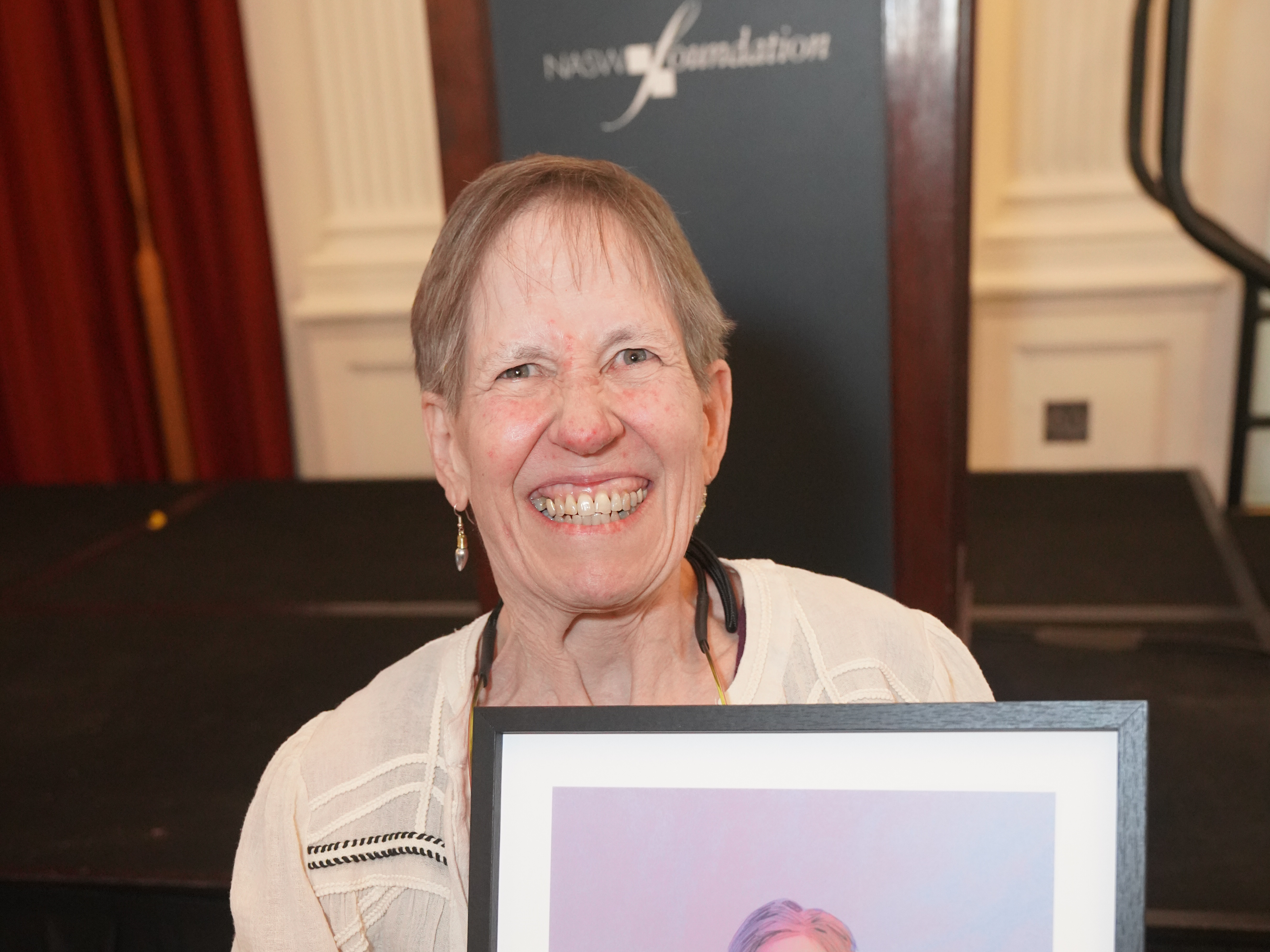
In October, O’Brien’s contributions were honored by the National Association of Social Workers Foundation, which named her an NASW Pioneer. This prestigious award is reserved for social workers who have paved the way for future generations and made significant impacts on the
human condition.
“It’s a very deep honor when your colleagues, other social workers, recognize that you’ve made a contribution,” O’Brien said. “All I’ve ever wanted to do is make contributions that could make a difference. This award really signifies some recognition that I have made a difference.”
O’Brien’s influence reached far beyond her research. She spent 20 years as an educator at the University of Illinois Chicago Jane Addams College of Social Work. She taught courses ranging from human behavior to community practice, drawing from her own experiences to guide undergraduate, graduate, and doctoral students. Her teaching style was also influenced by her undergraduate years.
“Saint Mary was very inspirational to me.” O’Brien said. “There were people who surrounded me and believed in what they were doing. They believed in teaching, and they believed in service to other humans. I think that liberal education really opened up my mind so that I could see possibilities for who I could be and what I could do.”
As she looks back on her career, O’Brien hopes her work will continue to inspire the next generation of social workers, including those in the Saint Mary BSW and MSW programs.
“I think the important thing about awards beyond just the moment of celebration is whether they represent something that will inspire other people to move forward in their path,” O’Brien said. “I think anybody who decides to be a social worker has some understanding that it’s not black and white, easy work. There has to be a certain amount of commitment. I believe my strength as a social worker is derived from the many others who mentored me along the way at all phases of my development.”
 Aspire Magazine
Leave a comment